
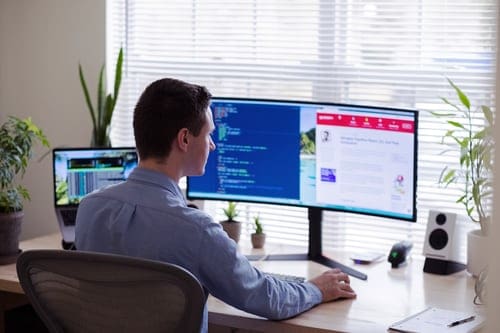
Due to the pandemic, home office expenses have become the hot topic in taxation. Many people were required to work from home, and others started side gigs to make ends meet. Read on to find out what you can claim as home office expenses if you’re an employee or self-employed.
Eligibility to claim Home Office Expenses
To claim your working from home expenses you must:
- be working from home to fulfill your employment duties, not just carrying out minimal tasks, such as occasionally checking emails or taking calls
- incur additional expenses because of working from home.
You can claim a deduction for the additional running expenses you incur because of working from home.
Running expenses are expenses that relate to the use of facilities within your home and include:
- electricity expenses for heating or cooling and lighting
- the decline in value of office furniture and furnishings as well other items used for work – for example, a laptop
- internet expenses
- phone expenses.
If you're a sole trader or business owner and your home is your principal place of business.
Similarities between employees and self-employed individuals
Whether you are claiming home office expenses as an employee or as a self-employed person, the basic eligibility criteria are the same. To claim these expenses, your workspace at home must meet one of the following conditions:
The workspace is where you mainly (more than 50% of the time) do your work.
You use the workspace only to earn your employment income. You also have to use it on a regular and continuous basis for meeting clients, customers, or other people in the course of your employment duties.
All expenses must be prorated based on the area that your home office represents relative to your entire home. For example, if your home office represents 10% of the total square footage of your home, you can only claim 10% of the eligible expenses.
More expenses are allowed if you are self-employed
As a rule, a self-employed individual can claim more expenses than an employee. For example, employees cannot claim expenses related to homeownership, such as mortgage interest and depreciation, but self-employed individuals can claim them. Computer accessories (monitor, mouse, keyboard, headset, etc.) and furniture (desk, chair) are other expenses that employees cannot claim.
There are also differences between salaried and commission employees. For example, a commission employee can claim home insurance and property taxes, but a salaried employee cannot.
Below is a handy table that compares the expenses you can claim as an employee or a self-employed individual.
| Expense | Salaried Employee | Commission Employee | Self-employed |
| Heat | Yes | Yes | Yes |
| Electricity | Yes | Yes | Yes |
| Insurance | No | Yes | Yes |
| Maintenance | Yes | Yes | Yes |
| Mortgage interest | No | No | Yes |
| Property taxes | No | Yes | Yes |
| Rent | Yes | Yes | Yes |
| Depreciation | No | No | Yes |
| Internet access fees | Yes | Yes | Yes |
| Cell phone fees | Yes | Yes | Yes |
| Computer accessories* | No | No | Yes |
| Furniture* | No | No | Yes |
* For self-employed individuals, these expenses would be claimed under depreciation.
If you are looking for a professional Tax Accountant who can lead you through the process of claiming business expenses on your tax return, then feel free to reach out to Filing Taxes at 416-479-8532. Schedule your tax preparation appointment with us and take the first step towards proper management of your finances. Our professional personal tax accountants will make sure to get you the maximum tax refund on your personal tax return.
Disclaimer: The information provided on this page is intended to provide general information. The information does not consider your personal situation and is not intended to be used without consultation from accounting and financial professionals. Salman Rundhawa and Filing Taxes will not be held liable for any problems that arise from the usage of the information provided on this page.