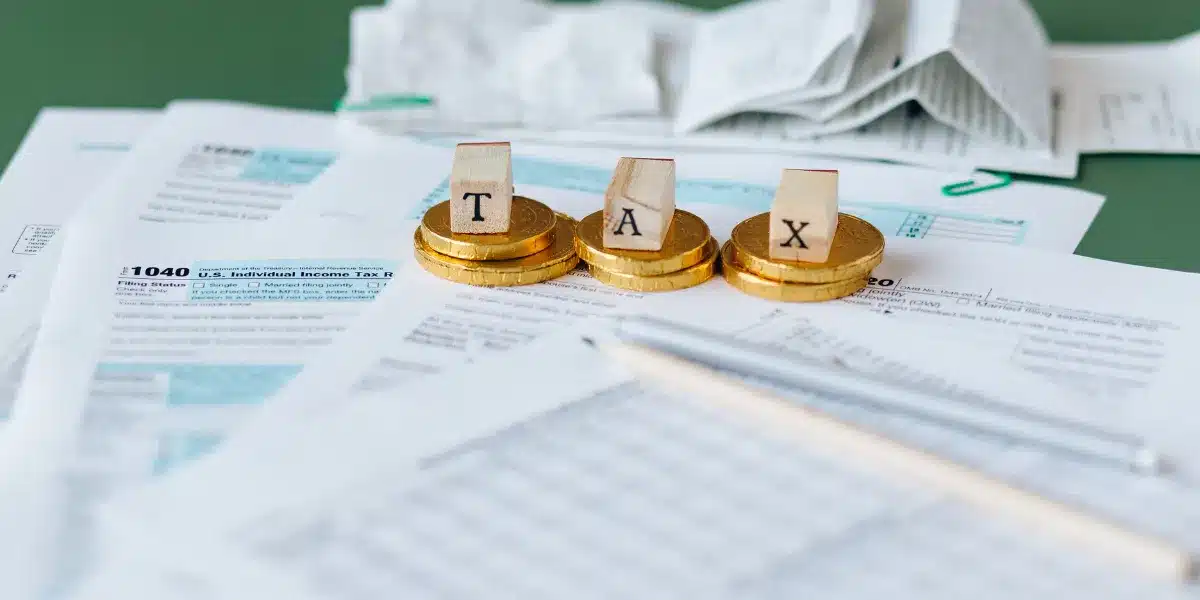
There is no minimum age to file a tax return in Canada. A 14-year-old with a part-time job and a 60-year-old with a full-time job are treated exactly the same way by the Canada Revenue Agency (CRA): what matters is income and filing triggers, not age. If your child earned income, received a T4 slip, or had tax withheld from a paycheque, filing a return is often the right move — and sometimes it is legally required.
This guide explains when a child must file a tax return in Canada, when filing is simply smart even if it is not required, how CPP and EI work on a young person’s paycheque, and how to file a child’s first return.
Is There a Minimum Age to File a Tax Return in Canada?
No. The CRA sets no minimum age for filing an income tax return. There is no rule that says a person must be 16, 18, or 19 before they can file. A child of any age — six months, six years, or sixteen — can file a tax return, and in some situations must file one.
The confusion usually comes from mixing up two different questions: “Does my child have to file?” and “Will my child owe tax?” They are separate questions in the CRA’s eyes. A child can be required to file a return even when no tax is owing, and a child can owe no tax and still benefit enormously from filing.
What decides whether a return is required is the Income Tax Act, not a birthday. Section 150(1) of the Act lists the triggers — owing tax, disposing of capital property, CPP or EI obligations on self-employment earnings, receiving a Canada Workers Benefit advance payment, or the CRA sending a Request to File or a Demand to File. Age appears nowhere in that list.
One claim worth correcting: there is no rule that excuses people aged 65 or older from filing because their income is low. Seniors must file when a trigger applies, just like everyone else — and in practice, seniors usually need to file every year to keep Old Age Security (OAS) and Guaranteed Income Supplement (GIS) payments flowing without interruption.
When Does a Child Have to File a Tax Return?
Your child must file a tax return for the year if any of the following apply:
- Tax is owing. If your child’s total income exceeds the available credits and deductions, tax is owing and a return must be filed.
- Self-employment income. A child who earned self-employment income must file, and CPP contributions are payable on that income once they turn 18.
- Capital property was sold. Selling shares, cryptocurrency, or other capital property triggers a filing requirement — even if the sale produced a loss.
- A home was sold. Since 2016, the sale of a principal residence must be reported on a return to claim the principal residence exemption, even when no capital gains tax is payable.
- Benefits must be repaid. If your child has to repay Employment Insurance (EI) or Old Age Security (OAS) benefits, a return is required.
- HBP or LLP repayments are owing. Repayments under the Home Buyers’ Plan or Lifelong Learning Plan must be reported on a return.
- A Canada Workers Benefit (CWB) advance payment was received. Advance CWB payments must be reconciled on a return.
- The CRA asked for a return. A Request to File or a Demand to File makes filing mandatory, whatever the income level.
Even when none of these triggers apply, filing is usually the right call. The next sections explain why.
How Much Can a Child Earn Before Paying Tax?
For 2026, the federal basic personal amount is $16,452. That is the amount of income a person can earn federally tax-free before federal income tax applies. Each province and territory sets its own basic personal amount on top of that, so the exact tax-free threshold depends on where your child lives.
In practice, that means a teenager earning $8,000 from a summer job will almost certainly owe no income tax. But “no tax owing” is not the same as “no reason to file.” Tax withheld from your child’s paycheques is only an estimate — the employer does not know your child’s total income, credits, or deductions for the year. The only way to get that withheld tax back is to file a return.
Other income counts too, not just job income. Interest and dividends from investments, RESP educational assistance payments (EAPs), and tips are all taxable income. A child with a well-funded investment account can owe tax even without a job.
CPP and EI on a Child’s Paycheque
Payroll deductions work differently for young workers, and this is where parents are most often surprised:
- CPP does not apply before age 18. Canada Pension Plan contributions are only deducted from employees aged 18 to 69. They start in the month after the employee’s 18th birthday, on earnings above the $3,500 annual basic exemption. If your 16-year-old’s pay stub shows no CPP deduction, that is correct — not an employer error.
- EI has no minimum age. Employment Insurance premiums are deducted from insurable employment at any age, up to the annual maximum insurable earnings. One exception matters for family businesses: if your child works for a business owned by a parent, the employment is generally not at arm’s length, and EI premiums usually do not apply. Confirm the specifics with your accountant before setting up payroll for your child.
- Income tax withholding is an estimate. An employer withholds tax based on the TD1 form and the pay period, not on your child’s annual income. A student who earns $6,000 in the summer may still have tax withheld — and can claim it all back by filing.
For 2026, the CPP contribution rate is 5.95% for employees on pensionable earnings between $3,500 and the year’s maximum pensionable earnings of $74,600, with the additional CPP2 tier above that. These figures change every year, so always check the current year’s rates before doing the math yourself.
Why File a Return Even When Your Child Doesn’t Have To?
Filing when it is not strictly required is one of the best financial habits a young person can start. Here is what a filed return unlocks:
- A refund of withheld tax. If any income tax or CPP was deducted at source, filing is the only way to get it back. For a teenager’s first job, that refund is often the entire amount withheld.
- RRSP contribution room starts building. RRSP room is 18% of earned income, up to $33,810 for 2026. The room starts accumulating as soon as earned income is reported on a tax return — even if your child never buys an RRSP. By the time they are earning real money, they may already have years of room banked.
- The GST/HST credit starts at 19. A person becomes eligible for the GST/HST credit at age 19, or earlier if they have a spouse or common-law partner, or are a parent living with their child. The CRA can only pay it if a return has been filed — the credit is calculated from the return.
- Tuition credits are recorded. Tuition amounts from a T2202 slip can be carried forward for future years or transferred to a parent (up to $5,000 federally). Both need a filed return to be tracked by the CRA.
- A CRA record is created. Filing sets up your child’s information with the CRA — Social Insurance Number, address, and filing history — which makes every future year simpler, including registering for CRA My Account.
How to File a Child’s First Tax Return
Filing a child’s first return is straightforward, with one quirk to expect:
- Get a Social Insurance Number (SIN). A SIN is required to file. If your child does not have one yet, apply at a Service Canada office — it is free, and you will need the child’s birth certificate.
- Gather the slips. Collect every T4, T4A, and T5 slip, plus any RESP T4A showing educational assistance payments. Employers must issue T4s by the end of February.
- Expect a paper return the first time. In most cases, a first return cannot be NETFILEd — the CRA’s NETFILE service is generally only available once a return has been filed in a previous year. A paper return mailed to the CRA works fine, or a tax preparer can file it electronically for you through EFILE.
- File by April 30. The filing deadline is April 30 for the previous tax year (June 15 if the child is self-employed, though any tax owing is still due April 30). A child with no tax owing faces no late-filing penalty, but filing on time keeps benefit payments and refund processing on schedule.
- Keep the notice of assessment. Once the CRA processes the return, it issues a notice of assessment (NOA). Keep it — it confirms the RRSP room earned, any tuition amounts carried forward, and the refund paid. After the first return is processed, your child can register for CRA My Account and file electronically in future years.
A parent can prepare the return and help with the paperwork, but the return itself belongs to the child. If your child is old enough to understand, walk them through it — it is the best first lesson in how taxes actually work.
Common Mistakes Parents Make
- Assuming under-18s never file. Age is irrelevant. Income and filing triggers decide.
- Using American rules. Canada has no “standard deduction” and no “dependent” filing status like the United States. Do not apply US tax concepts to a Canadian return.
- Skipping the return because no tax is owed. The refund, RRSP room, and benefit eligibility are all lost if no return is filed.
- Forgetting investment income. A child’s interest, dividends, and RESP payments are taxable to the child, not the parent — and the CRA receives copies of those slips.
- Waiting years to start. Filing late is always allowed — the CRA accepts returns up to 10 years back when a refund is owing — but every year of delay is a year of lost RRSP room tracking and benefit eligibility.
Frequently Asked Questions
What is the minimum age to file taxes in Canada?
There is none. The CRA sets no minimum age. A child files a tax return when their income or situation triggers a filing requirement — or when filing gets them a refund or benefit — regardless of age.
Does my 16-year-old need to file taxes for a part-time job?
If tax was withheld from their pay, filing gets it refunded. Filing is legally required if they owe tax, earned self-employment income, sold capital property, or the CRA asked them to file. For most teens with a part-time job, filing is worthwhile even when it is not mandatory.
Do children pay CPP on their paycheque?
No — not before age 18. CPP contributions start in the month after an employee’s 18th birthday, on earnings above the $3,500 annual exemption. EI premiums, by contrast, apply to insurable employment at any age.
Can a child build RRSP room before turning 18?
Yes. RRSP room is 18% of earned income reported on a tax return, up to $33,810 for 2026. The room starts accumulating as soon as the earned income is reported, even if the child never contributes to an RRSP.
Can my child’s first tax return be filed online?
Usually not. A first return generally cannot be NETFILEd, because NETFILE is available once a return has been filed in a previous year. Mail a paper return to the CRA, or have a tax preparer file it electronically through EFILE.
Does filing a return affect the Canada Child Benefit?
No — the Canada Child Benefit is paid to the parent, based on the parents’ returns. But the child’s own return matters for the child’s future GST/HST credit and for building their own CRA record.
If your child earned income this year and you are not sure whether they need to file, our personal tax accountants can review their slips and tell you in one short call. Filing a child’s first return correctly sets up years of refunds, RRSP room, and benefits — it is worth doing right the first time. Call Filing Taxes at (416) 479-8532 to book a free consultation.
Disclaimer: The information provided on this page is intended to provide general information. The information does not consider your personal situation and is not intended to be used without consultation from accounting and financial professionals. Salman Rundhawa and Filing Taxes will not be held liable for any problems that arise from the usage of the information provided on this page.